SPS agreement negotiations: update

CFA continues to engage closely with Government on preparations for a potential SPS Agreement between the UK and the EU with the aim of easing post-Brexit trade restrictions.

Karin Goodburn established and chairs the SPS Certification Working Group (www.chilledfood.org/brexit), which comprises some 30 trade and professional organisations and meets weekly with senior officials across relevant departments and agencies. A summary of legislative divergences requiring attention in the streamlining of trade has been shared with Government officials and with the Lords EU Affairs and Commons EFRA Committees.

Concerns focus on the lack of clarity of precisely what legislation will be within the scope of the Agreement, without which planning for change is severely hindered, Government’s policy of seeking Dynamic Alignment (DA) and impacts of EU/UK regulatory divergence since the end of the Transition Period. DA means adoption of EU legislation passed since the end of the Transition Period, and on an ongoing basis, yet without full representation in its development. Divergence from EU legislation has occurred either due to EU or UK laws being changed since Brexit.

In the meantime CFA continues to compile APHA data on the cost of Export Health Certificate completion for certain exports to the EU post-Brexit remains around £3.5m per month – more than £280m since the end of the Transition Period. This is equivalent to the profit from over £14 billion in food sales, and a continued reminder of the commercial stakes involved in getting these negotiations right.

Sewage sludge: strengthening the rules

CFA has submitted a response to the Government’s consultation on sewage sludge regulations, ahead of the March 2026 deadline.

Dr Rachel Hackett led CFA’s engagement on the consultation, which proposed three options: consolidating regulations under Environmental Permitting Regulations; retaining the current structure but reviewing its content; or continuing with guidance and good practice only.

CFA’s position is clear. The industry has followed the ADAS Safe Sludge Matrix – developed in the late 1990s with CFA and retailers – for over 25 years, preventing human sewage sludge from being applied to RTE crops. The Matrix has been included in every edition of CFA’s Microbiological Guidance for Growers and is universally supported by UK retailers. It has, however, always relied on commercial commitment rather than legal force.

The case for legislative underpinning is well established. Sludge treatment historically achieves only a 2-log reduction in pathogens and does not address heavy metals or, increasingly, PFAS and microplastics – making it unsuitable for food production.

Growers outside formal assurance schemes can introduce risk for the wider supply chain, and past incidents have demonstrated that poor
overseas practice can result in UK products being rated high risk by authorities, despite no domestic usage – although no legal prohibition exists. CFA’s view is that strengthening UK law by incorporating the Safe Sludge Matrix would protect responsible growers, reduce reputational risk across the supply chain and provide the legal certainty that 25 years of good practice deserves.

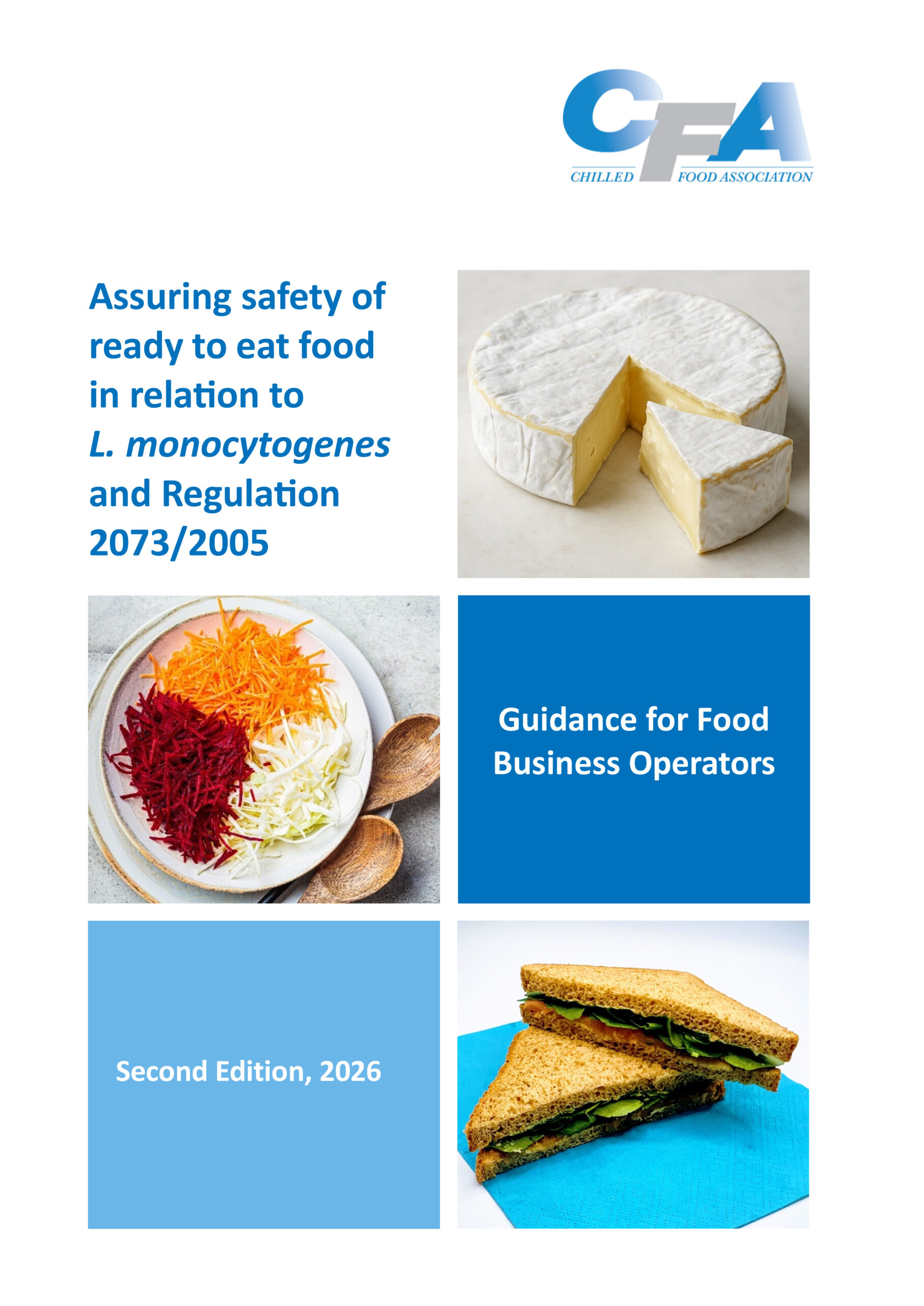
CFA-led Listeria guidance supported by FSA and FSS tops 1,500 downloads

CFA’s guidance Assuring Safety of Ready-to-Eat Food (RTE) in Relation to Listeria monocytogenes and Regulation 2073/2005 has been downloaded more than 1,500 times since its launch in January 2026 – reflecting the demand across industry, enforcement and the wider food sector for authoritative, practical guidance ahead of the change to the law on 1 July 2026 in the EU and other jurisdictions applying EU law, e.g. Northern Ireland.

This guidance is a major update of the 2010 CFA/BRC/FSA shelf life guidance and was developed by the CFA-led Industry Listeria Group in direct response to questions arising from the amendment to EU Microbiological Criterion 1.2b. A point the guidance makes clear: the 1 July change does not alter the fundamental shelf life determination requirements that have been in place under Regulation 2073/2005 for nearly 20 years. The amendment tightens the regulatory consequence where a Competent Authority is not satisfied with the basis of shelf life for an RTE food supporting the growth of L. monocytogenes – it does not introduce new methods or mandatory testing regimes. There is no change to longstanding safety or shelf life requirements.

The guidance places HACCP at the centre of food safety assurance and covers shelf life establishment and evidencing, environmental monitoring, ingredient controls, worked examples, enforcement support, and a Q&A addressing common operational and enforcement questions. It was developed with input from major retailers, trade associations, manufacturers, the Food Standards Agency and Food Standards Scotland. Copies are available here: https://bit.ly/4rtqmLI

“This vital guidance brings practical clarity to the steps manufacturers and other food business operators must take to assure the safety of RTE foods with respect to L. monocytogenes, including how to establish and evidence shelf life. It places prevention at the centre of operations – with strong HACCP, backed by good hygiene and robust prerequisite programmes.”
Karin Goodburn MBE, Chair, Industry Listeria Group, Chilled Food Association

“We welcome this updated industry-led guidance, which provides practical advice to help food businesses manage the risk of Listeria monocytogenes in ready-to-eat foods. It will support manufacturers, retailers, and enforcement officers in meeting regulatory requirements and maintaining high standards of food safety.”
James Cooper, Deputy Director of Food Policy, Food Standards Agency and Garry Mournian, Head of Policy and Regulatory Affairs, Food Standards Scotland

BRCGS Issue 10: CFA at the table

BRCGS certification has long been a membership requirement for CFA – and the Standard’s origins are closely linked to CFA’s own history, with the original accreditation scheme arising from the first editions of CFA’s chilled food production Guidelines in the late 1980s and early 1990s.

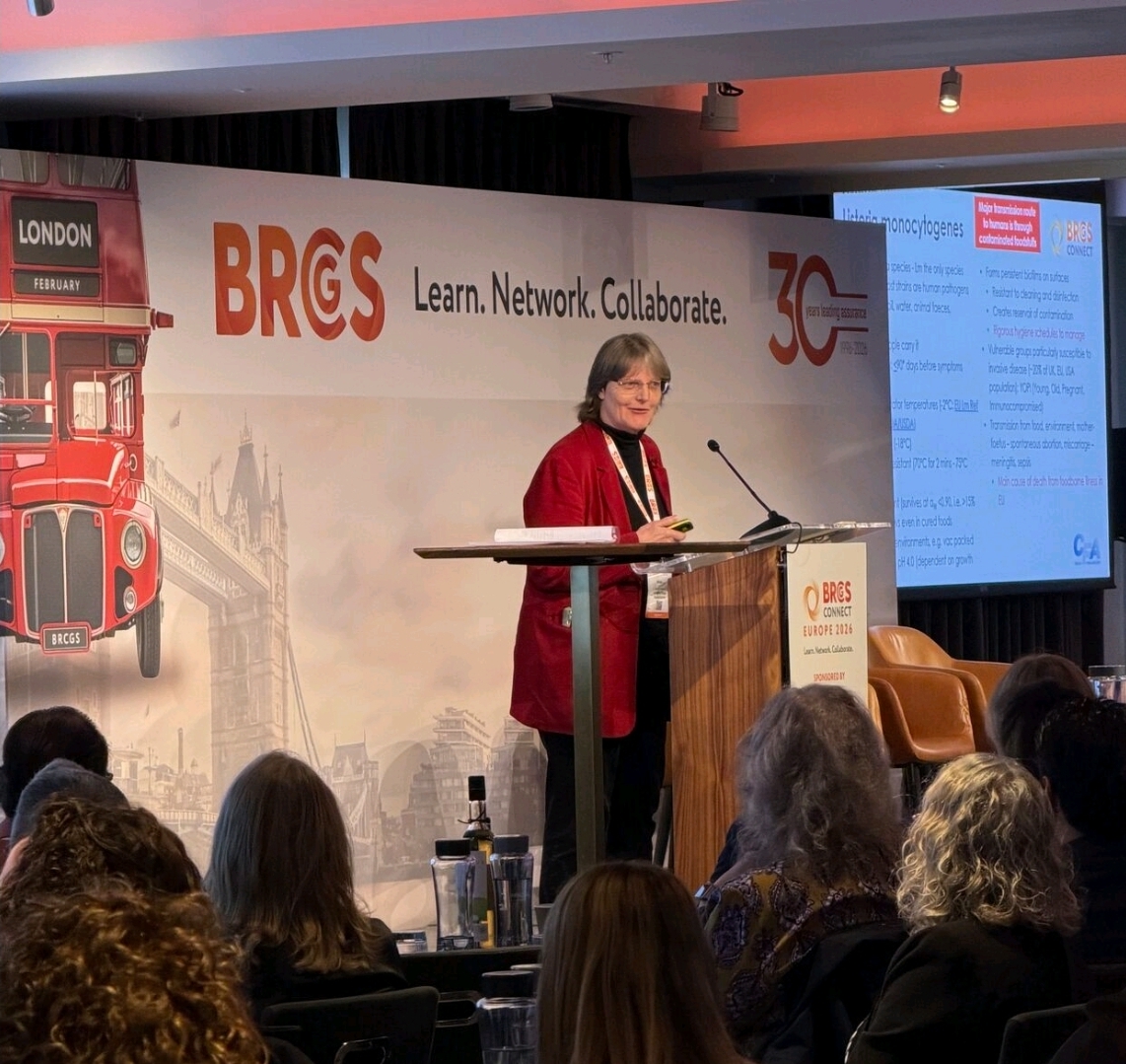
CFA’s Karin Goodburn has been involved in BRCGS working groups from Issue 4 through to Issue 9 and has now been appointed to the English language Issue 10 Technical Working Group – following a competitive selection process attracting more than 500 applications from around the world for the English- and Mandarin-speaking working groups. The group will meet 12 times over 12 months to develop the new Standard.

Karin’s participation provides a valuable opportunity to help shape Issue 10, with a particular focus on the risk assessment of foods produced for vulnerable groups such as hospital catering – an area where CFA has longstanding concern expertise and a direct interest in ensuring the Standard reflects current best practice. Members’ views on the Standard are welcome.

If you have comments or observations you would like Karin to take into the working group, please get in touch.

CFA April 2024 Newsletter

In this issue:

CFA & Policy:

  • Consultation on EU’s proposed changes to Listeria criteria open until 8 May: Companies are urged to respond to the consultation, at: https://bit.ly/43YQeUi
  • Listeria – improved enumeration method developed by CFA
  • Brexit – First Phase of BTOM implemented, Second Phase arrives 30 April
  • Health and Safety – the risks posed by flooring, footwear and frost
  • Climate Change Agreements
  • Sustainability: New recycling regime should exclude laminated board says CFA
  • Putting rapid environmental testing to the test
  • Making our (International Women’s) day – CFA’s Inspirational Women

35 Years of CFA:

Chilled Education;

  • Sharing knowledge and support online
    • British Science Week – Making time for science
    • STEM Platform: Online career talks
  • The bliss of food science comes to Blisworth School!
  • More fun food experiments!
  • Science Club resources developed
  • FDF Awards – Crossed fingers!

CFA September 2023 Newsletter

In this issue:

  • Brexit latest
  • Listeria focus – guidance docs and more
  • Botulinum report welcomed
  • CFA in numbers
  • Waste reduction success
  • Extreme weather guidance
  • H&S update
  • Risk assessment

Chilled Education news

  • STEAM
  • BNF partnership
  • Shopify news
  • Forensics and food
  • Profile raising chilled jobs

CFA Publishes 2022 Annual Report

CFA’s Annual Report for the calendar year 2022 has been published summarising key activities and aims including:

  • EU Listeria micro criteria: Established and leading Industry Listeria Group engaged with UK
    Government and internationally with industry in readiness for EU consultation on potential changes to
    requirements. Developed lobbying strategy and summarised evidence base including guidance on
    effective environmental sampling. Aiming to retain current effective food safety measures.
  • Lm Biome: Developed validated microbiological method to assess microbial reduction efficacy. Partner
    in CPS-funded project with CEBAS (starting 1/1/23).
  • Incoming raw material positives: impacts assessed (person days, cost) to help focus best practice
    development.
  • Brexit: Composite products focus. Established and leading SPS Certification WG of industry, certifiers
    and Port Health engaging with Government resolving issues and supporting eCertification
    development. Tracking & reporting on EHC applications, certifier burden & costs.
  • Briefing documents published on: raw RTE beetroot and onion safety best practice, relevance of
    generic E. coli and STEC testing to food safety, ethical employment in agriculture and food production
    and sustainability in agriculture and fresh produce.
  • Vac Pack/MAP foods: CFA gave evidence to the ACMSF’s risk review of original 1992 guidance, aiming
    for retention of flexibility for SUSSLE and removal of non-science-based rules.
  • CFA Board: membership criteria reviewed and Board refreshed.

CFA’s priorities for 2023 cover:

  • Education/skills
  • Building knowledge
  • Lobbying for positive change
  • External engagement
  • Knowledge transfer


CFA April 2023 Newsletter

In this issue

  • Brexit latest
  • Vacuum Packed/ MAP foods: ACMSF risk review
  • On the road to net zero
  • Latest on the EU’s proposed Listeria legislation
  • Chilled market data
  • Signing up to H&S strategy
  • FSA’s PDM site visit
  • New spot buying protocol
  • CFA branded cup cakes
  • Fresh produce activities
  • Colleague honoured

Chilled Education news

  • The many uses for the versatile UV torch
  • CEd overview
  • Resources on Shopify
  • Supporting partners

CFA October 2022 Newsletter

In this issue:

  • Keeping affordable food on tables   
  • Latest on the EU’s proposed Listeria legislation
  • Listeria shelf life guidelines challenged
  • New best practice guidelines for onion and beetroot
  • 29 million meals redistributed
  • Data collection and use
  • Biocides
  • Brexit paperwork solutions
  • New honour
  • Vacuum Packed/ MAP foods: ACMSF risk review

Chilled Education news

  • Exploring the science of sandwich making
  • New case studies shared
  • Resource refresh for industry colleagues
  • Store cupboard science
  • Inspiring with experience


CFA April 2022 Newsletter

In this issue:

  • Sunflower oil shortage and substitution
  • The impact of COVID – a diet of cake and lasagne!
  • Sustainability position statements published
  • The £60m cost of Brexit certification red tape
  • Health and Safety support
  • Simplifying risk assessment for fresh produce
  • The future of biofilms
  • And the winners are….
  • Vacuum Packing/ MAP latest
  • Listeria response update
  • Not to be sniffed at….
  • Easter eggs-periments!
  • Members enjoy a resource refresh
  • Listeria awareness
  • New career paths insights
  • Getting social

CFA Newsletter No.57


CFA April 2021 Newsletter

In this issue:

  • Brexit Paperwork Headache for Short Shelf Composite Products
  • Chilled Food Market Data
  • COVID-19 Support for CFA Members
  • Chlorate and Hygiene Biocides
  • Vacuum Packed and MAP Guidance
  • Third Party Laboratory Guidance Available
  • Hitting Health & Safety Targets
  • Sustainable Development Group
  • Working in a Virtual World
  • 10 Years of Chilled Education
  • Store Cupboard Science
  • STEM Partnership

CFA NEWSLETTER No.55 for website

CFA October 2020 Newsletter

  • Biocides breakthrough
  • Review of VP/MAP guidance
  • Getting SUSSLE sussed
  • COVID industry updates
  • Listeria best practice
  • Manufacturing guidelines update
  • Sustainability
  • Produce group sustainability
  • STEM celebrates women
  • Apprentice shortlisted
  • Insider insights
  • Science at home
  • MicroTrumps record attempt
  • CEd takes a new approach

CFA Newsletter 54 October 2020

CFA November 2018 Newsletter

In this edition:

  • Guidance on Shelf Life with respect to
    Clostridium botulinum
  • Post-Brexit EU Law
  • Comments to ACMSF on potential impacts of biocides regulation on food hygiene
  • WRAP Brings Fridge Issue in from the Cold [Chill the Fridge Out campaign]
  • On the Road to Less Waste [UK Food Waste Reduction Roadmap]
  • Health & Safety Matters
  • Green light for Blue light project
  • Aylesford School’s unique activities linking food technology and science teaching
  • Big Bang East Midlands
  • New CEd Banners
  • Summer Schools

CFA NEWSLETTER No.50 November 2018  


CFA December 2017 Newsletter

Items in this edition:

  • Biocides go global – new GFSI Technical Working Group
  • Fridge issue hots up again
  • National Biofilms Innovation Centre Launched
  • Genome sequencing – getting the whole picture
  • SOFHT Dorothy Cullinane Award for CFA Director Kaarin Goodburn MBE
  • Changing places and faces
  • CFA welcomes back Bakkavor

CFA Newsletter No. 48 December 2017

CFA’s April 2017 Newsletter Available

The April issue leads with CFA’s success in securing a more appropriate European regulatory approach to biocides in the medium term at least following several years concerted lobbying co-ordinated by CFA and endorsed by the UK’s HSE, FSA and the European Commission.

It also highlights progress respoin seeking changes to the Food Standards Agency’s June 2016 draft revised Vacuum Packing/MAP guidance to ensure it reflects best practice and microbiological risks.

CFA News No 47 April 2017

  • CFA lobbying secures ‘common sense’ EU agreement on Biocides Regulation
  • Chilled Food Sales Show no Signs of Cooling Down
  • Misleading Vacuum Packing/MAP Guidance Reworked
  • Peak Sustainable Palm Oil?
  • Liquid assets – New Water Quality Management Guidance Published
  • £12.5m for biofilms research
  • CFA in the corridors of power
  • New member news
  • An Ambassador for Women in Science
  • Chilled Education
    • A return to Reading
    • CEd pops up in Leicester!
    • New lesson plans for teachers
    • Tweeting about science
    • Summer School support

Download a PDF copy.

CFA’s Latest Newsletter Available

The November issue leads with CFA’s response to the Food Standards Agency’s Vacuum Packing/MAP consultation. 

It also brings news of changing faces, site visits, new members and a special award for an industry colleague.

Chilled Education is also celebrating with a bright new star, success at a major science fair and the launch of a brand new website.